

Poszetka x IWP: Our Collaboration with the Institute of Industrial Design
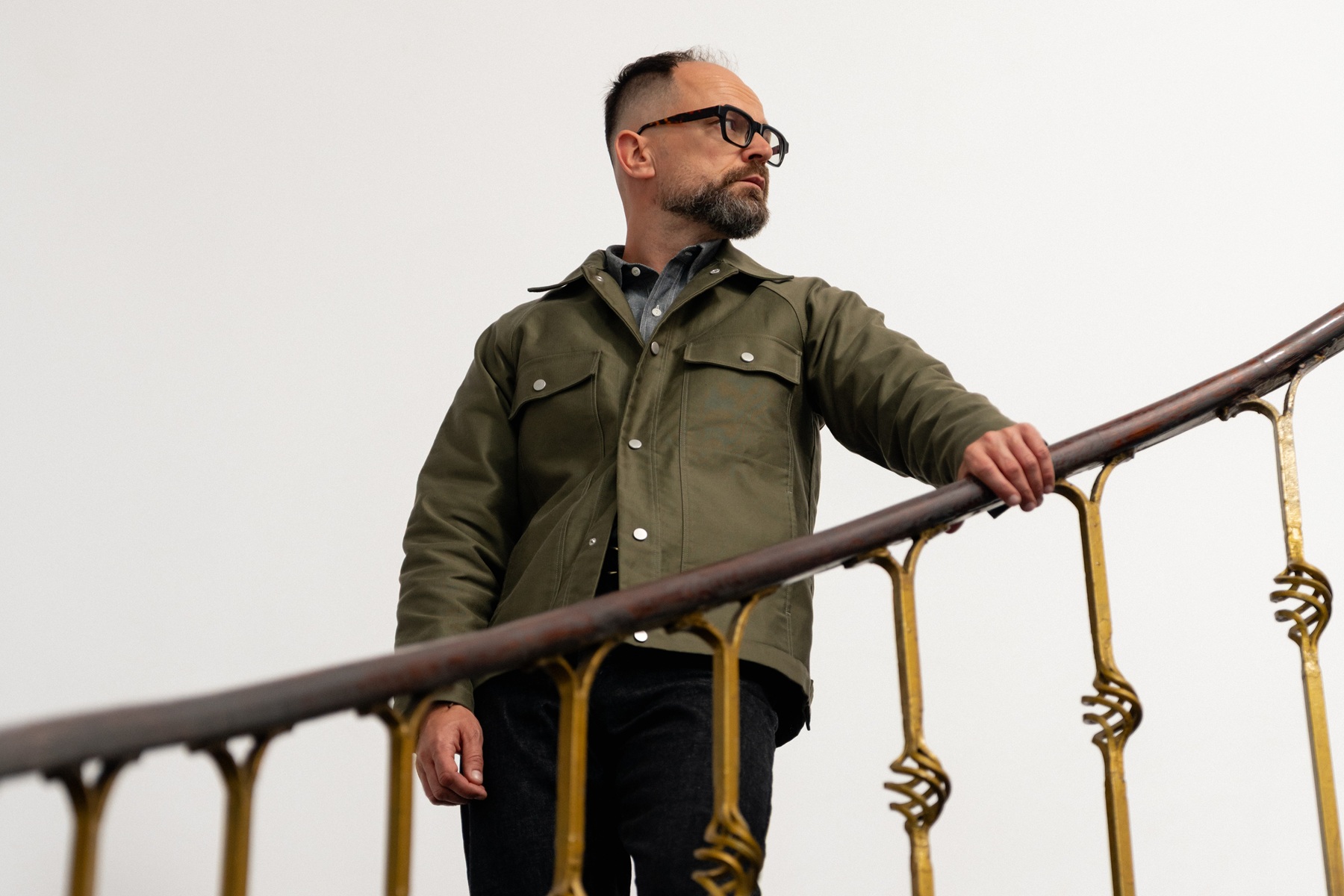
In search of the Polish roots of workwear style and timeless designs which — though created over half a century ago — still hold their ground today, we delved into the vast archives of the Polish Institute of Industrial Design.
The IWP is a Polish design legend. From within its walls, where four specialized studios operated (dedicated to textiles, clothing, furniture, and ceramics), many iconic projects were born — among them famous porcelain from Ćmielów, such as the “Dorota” set. Today, despite many changes and upheavals (especially around the turbulent transformation of the 1990s), the Institute continues its work. One of its roles is caring for the rich design heritage it has amassed over 75 years.
What interested us — and you, probably, too — most is the part of the archives containing garment documentation. This is the material to which Poszetka was granted access, and which, together with the Institute, we’ve been able to revive and recreate as a collaboration collection!

Although the documentation included not only workwear but also “fashion” garments, we approached the collection with the same motto that guides our Working Class series: workwear of the past for the labour of today. Using the original archival cards as our base, we created a contemporary reinterpretation of the designs from the 1950s, 60s, and 80s, looking for details that give them a distinctly modern feel, making them everyday casual options.
Our collaborative collection consists of two informal jacket designs, one long-sleeve polo sweater (in two color versions), and four fabric patterns, which we translated into pocket squares and square scarves.


Naturally, every product from the Poszetka x IWP collection has been produced in Poland — the only right choice for a collaboration so deeply rooted in the Made in Poland spirit.
Made in Poland is also the theme of the second issue of the Everyday Classic Magazine, where you will also find a conversation with Michalina Pietrzyk, Vice President of IWP. If you want to learn more about how garment patterns were created in the times of central planning, what role sheep-shearing scissors played in fabric design, what happened to the Institute’s vast archives after 1989, what Polish workwear really means, and how this collaboration came about in the first place — have a read!


Koszulka “polo” męska
[Men’s Polo Sweater]
What charmed us in this project was the fact that, despite being the oldest of the pieces we drew from — nearly 70 years old! — it looks strikingly contemporary.
We made just a few small adjustments to make it easier to wear day-to-day.


Ubranie termoizolacyjne do badań w komorze bioklimatycznej w Libercu
[Thermal Suit for Bioclimatic Chamber Research in Liberec]
It may sound like the most complex and technical name possible, but what hides beneath is… a simple casual jacket.
This IWP design is a perfect example of how workwear garments — even those not as typical as well-known chore coats — originally created for labor can, in reinterpretation, become everyday, modern options. The cut resembles a denim trucker jacket, with cleverly hidden hand pockets sewn into the same panel as the chest flap pockets.


Wdzianko męskie
[Men’s Casual Jacket]
This somewhat enigmatic, almost affectionate Polish word used by designers (”wdzianko” could be translated as “little uniform jacket”) refers here to a quasi-sportcoat, quasi-overshirt. Designed around the late 1950s/early 60s, it was most likely intended either as a uniform for factory directors or as an informal “fashion” garment.


Decorative Fabric – Anna Orzechowska
Available as a 65 x 65 cm scarf and a 40 x 40 cm pocket square.
Orzechowska worked at the Institute within a team responsible for developing modern textile design. Her works reflected the aesthetics of the “thaw” period — abstract forms, geometric and organic patterns, vibrant colors, and experimental technical samples. The decorative fabric was created during her time at the Institute in 1955–57. Produced in several color variations, it drew inspiration from unism and collage.


Fabric 7017 – Danuta Paprowicz-Michno
Available as a 65 x 65 cm scarf and a 40 x 40 cm pocket square.
This textile design was created at the Institute of Industrial Design in 1955, intended for printing on silk. It was the work of Danuta Paprowicz-Michno (1926–2016), one of Poland’s most distinguished textile designers. The pattern had no name, only a number. It depicts female figures in winter outfits, rendered in the characteristic manner of the Polish “new look”: simplified, stylized, and surrounded by abstract forms. The modernity of the project was further emphasized by its pastel color palette.


Fabric 6007 – Anna Nikołajczuk
Available as a 65 x 65 cm scarf and a 40 x 40 cm pocket square.
This pattern was designed at the Institute of Industrial Design in 1956 by Anna Nikołajczuk (1924–2019). Originally intended for dresses, it came in five different colorways. The design clearly draws on folk inspirations — birds, lilies, leaves, and flowers — reflecting the concept of modern Polish design promoted by IWP founder, professor Wanda Telakowska, rooted in the art and folklore of the countryside.


Makata [Tapestry] – Anna Nikołajczuk
Available as a 65 x 65 cm scarf and a 40 x 40 cm pocket square.
The colorful Makata [tapestry] was designed in 1956 at the Institute of Industrial Design by Anna Nikołajczuk (1924–2019) as a decorative fabric measuring 87 x 169 cm. It was created to be hung on the wall or used as a table runner. For its time, the modern abstract composition brought a breath of fresh air and embodied the IWP motto: “Beauty for everyday life, for everyone.”
The full Poszetka x IWP collection is now available in our online shop and in our Katowice store.